
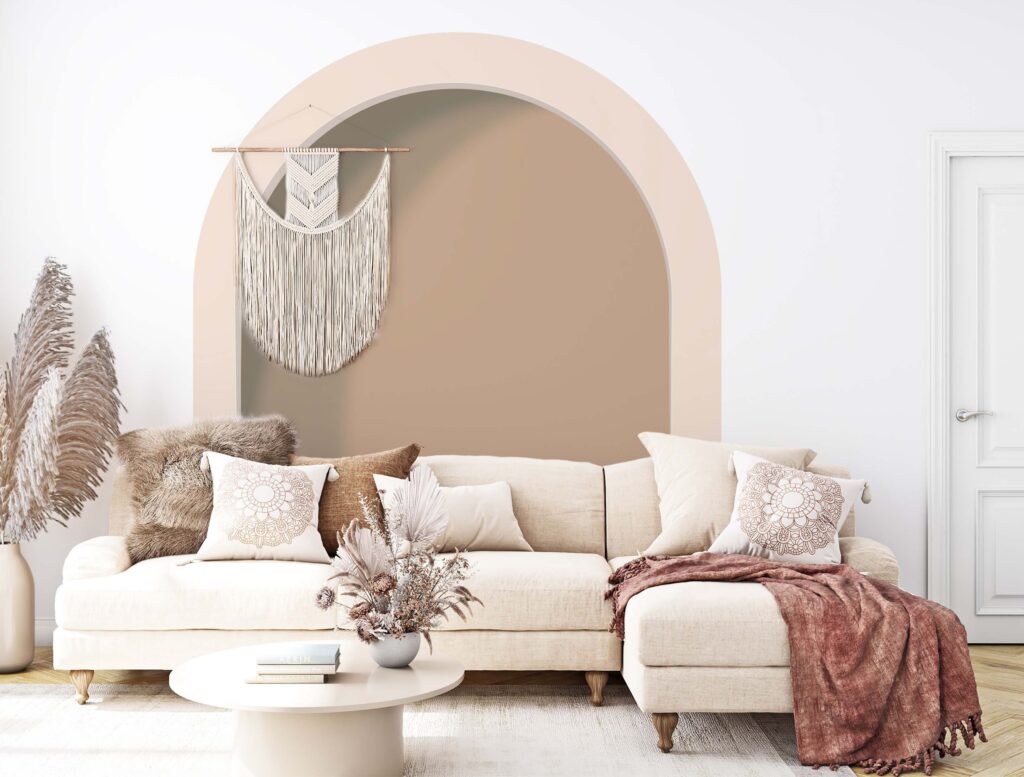
So you found the perfect wall decal — and then you looked at your actual walls. Textured paint. Orange peel. Maybe even a light knockdown finish. If you’ve been wondering whether wall decals even work on textured surfaces, the answer is: yes, with the right approach.
This guide walks you through exactly how to apply wall decals on textured walls without bubbles, peeling edges, or wasted money. Whether you’re decorating a nursery, living room, or rented apartment, these steps will get you a clean, lasting result.
First: Understand Why Texture Is Tricky
Smooth walls give decals a full, uninterrupted contact surface. Textured walls don’t — the adhesive can only grip the peaks of the texture, leaving tiny gaps underneath. Those gaps cause:
- Lifting edges within days of application
- Air bubbles that keep coming back
- Partial adhesion where the decal looks wrinkled or cloudy
The good news: not all textures are equal, and not all decals behave the same on them.
Texture Types and What to Expect
| Texture Type | Decal Compatibility | Notes |
|---|---|---|
| Eggshell / flat paint | ✅ Excellent | Closest to smooth |
| Orange peel (light) | ✅ Good | Works with fabric decals best |
| Orange peel (heavy) | ⚠️ Fair | Use fabric + heat technique |
| Knockdown | ⚠️ Fair | Edges may lift over time |
| Skip trowel / heavy stucco | ❌ Not recommended | Too much relief |
| Wallpaper with texture | ❌ Not recommended | Surface not stable |
What You’ll Need
Before you start, gather these tools:
- Fabric wall decal (more forgiving on texture than vinyl — more on this below)
- A credit card or squeegee
- Rubbing alcohol (70% isopropyl)
- Lint-free microfiber cloth
- A hair dryer
- Measuring tape and painter’s tape
- Pencil (for light positioning marks)
Step 1: Choose the Right Decal Material
This is the single most important decision for textured walls.
Vinyl decals are stiffer and rely on a strong initial adhesive bond. On textured surfaces, they struggle to conform to the peaks and valleys of the wall — leading to lifting corners within weeks.
Fabric decals (also called repositionable or peel-and-stick fabric) are softer, more pliable, and use a gentler adhesive that grips more evenly across an uneven surface. They can be repositioned multiple times without losing adhesion, which makes them ideal for textured walls.
DecalHouse tip: All our wall decals are available in both vinyl and fabric versions. For textured walls, always select fabric at checkout. Browse the full collection at DecalHouse Wall Decals.
Step 2: Prepare the Wall Surface
Clean the wall thoroughly. Any dust, grease, or moisture will prevent the adhesive from bonding properly. Use a lint-free cloth dampened with 70% isopropyl alcohol. Wipe the entire area where you plan to apply the decal and let it dry completely — at least 15 minutes.
Do not use soap and water on walls with flat paint. It can lift the paint and create an even less adhesive-friendly surface.
Check for loose paint or peeling areas. Run your hand across the surface. If any paint flakes off, that area needs to be repainted and fully cured (at least 30 days) before applying a decal.
Temperature matters. The ideal application temperature is 65°F–75°F (18°C–24°C). Cold walls make adhesives stiff; hot walls can cause the decal to stretch. Never apply to a wall that’s been in direct sunlight for the past hour.
Step 3: Plan Your Placement
Measure twice, apply once. Use painter’s tape to mark the boundaries of your decal before you peel anything. Hold the rolled or folded decal up to the wall and mark the top corners lightly with a pencil.
For large decals, consider printing a paper template or using the decal’s backer paper as a positioning guide before committing.
Step 4: Warm the Wall First
This step is specific to textured surfaces and makes a significant difference.
Use a hair dryer on medium heat to warm the application area for 20–30 seconds before peeling the decal. A slightly warm wall makes the adhesive more pliable, allowing it to conform better to the peaks of the texture rather than sitting rigidly on top.
Don’t overheat — if the wall is too hot to touch comfortably, let it cool for a minute before applying.
Step 5: Peel and Apply Slowly
For small decals (under 12 inches): peel the entire backer off and apply in one motion from one edge to the other.
For large decals: use the hinge method.
1. Peel the backer halfway down
2. Fold the exposed backer back up and tape it in place temporarily
3. Align the decal with your pencil marks
4. Slowly peel the backer down while pressing the decal onto the wall in a top-to-bottom, side-to-side motion
Never stretch the decal. Let it fall naturally onto the surface.
Step 6: Press Firmly with a Squeegee
Using a credit card or squeegee, press the decal firmly onto the wall. Work from the center outward to push air bubbles toward the edges.
On textured walls, press harder than you would on a smooth surface — you need the adhesive to make contact with as many texture peaks as possible.
After your first pass, go over the entire decal again with the hair dryer on low heat for 10–15 seconds, then immediately press again with the squeegee. The heat softens the adhesive and helps it grip the texture more deeply.
Step 7: Remove the Transfer Tape (if vinyl)
If you’re using a vinyl decal with transfer tape, peel the tape back at a sharp 180° angle (peeling back on itself, not pulling away from the wall). Pull slowly. If the decal starts to come with the tape, press it back down and wait another minute before trying again.
For fabric decals, there is no transfer tape — just peel the backer and apply.
Step 8: Deal with Lifted Edges
Even with the best technique, edges may lift slightly on heavy textures. Fix them immediately:
- Apply a tiny drop of repositionable craft glue under the lifted edge with a toothpick
- Press down firmly for 30 seconds
- Wipe away any excess
Alternatively, warm the edge with a hair dryer and press firmly for 20 seconds.
Step 9: Allow 24 Hours to Set
Resist the urge to touch or adjust the decal for the first 24 hours. The adhesive continues to bond during this time. Full adhesion strength is typically reached at 48–72 hours.
Common Mistakes to Avoid
Applying to freshly painted walls. Paint needs to cure for a minimum of 30 days before a decal will adhere properly. A freshly painted wall will peel right off with the decal.
Skipping the alcohol wipe. Even a wall that looks clean has invisible dust and oil that prevents adhesion.
Rushing the squeegee step. The most common cause of air bubbles on textured walls is not pressing hard enough. Take your time.
Using vinyl on heavy texture. If your walls have a pronounced texture and you’ve already ordered vinyl decals, try applying them anyway — but use maximum heat and pressure. If they still don’t adhere, fabric decals are your solution.
Will Decals Damage My Textured Walls?
Properly installed fabric decals removed correctly will not damage textured walls. The key is to remove slowly and at room temperature. Never rip a decal off — pull it back on itself at 180° and go inch by inch. If the wall was freshly painted or the paint is already in poor condition, damage is possible regardless of the decal.
For rental-friendly applications, fabric decals are the safest choice. See our related guide: Best Wall Decals for Rentals.
Final Thoughts
Applying wall decals on textured walls is absolutely doable — you just need to match your decal material to your wall type, prep the surface properly, and use a little heat. Fabric decals are your best friend on anything other than a perfectly smooth wall.
Ready to find the right design? Browse hundreds of removable wall decals — all available in fabric for textured walls — at DecalHouse.
For detailed application photos and a video walkthrough, visit our How to Apply Instructions page.