
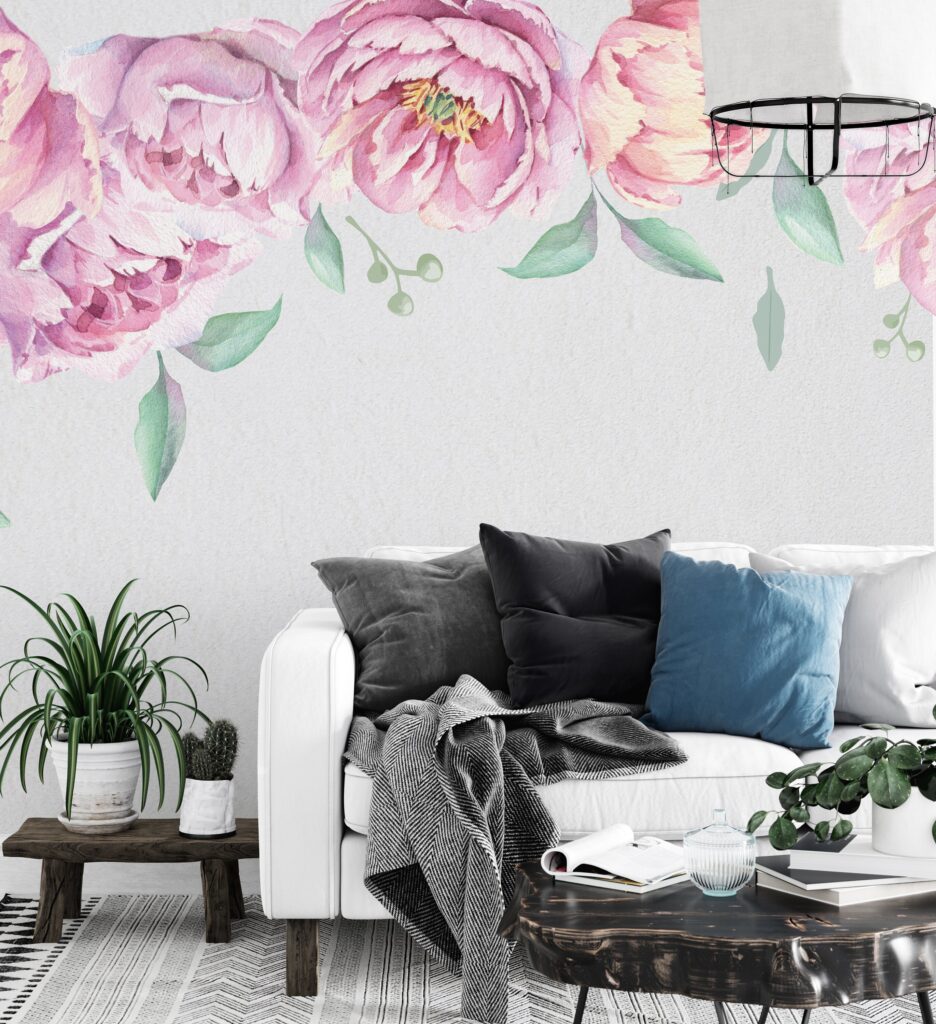
You’ve decided a plain wall isn’t cutting it. Now the question is: what do you actually put on it?
Three options dominate home decor: wall decals, wallpaper (peel-and-stick or traditional), and painted murals. Each works beautifully in the right situation and fails in the wrong one. This guide breaks down the real differences — cost, installation complexity, lifespan, and reversibility — so you can choose confidently.
Quick Comparison Table
| Factor | Wall Decals | Peel & Stick Wallpaper | Traditional Wallpaper | Painted Mural |
|---|---|---|---|---|
| Average cost (accent wall, 10×8 ft) | $25–$120 | $80–$300 | $200–$800+ | $400–$2,500 |
| Installation complexity | Easy (DIY) | Moderate (DIY) | Hard (professional recommended) | High (artist) |
| Installation time | 30–90 minutes | 2–6 hours | 6–12+ hours | 2–5 days |
| Lifespan | 3–7 years | 3–5 years | 10–20 years | 10–30 years |
| Reversible/removable | ✅ Yes (easy) | ✅ Yes (moderate) | ❌ Difficult | ❌ No |
| Rental-safe | ✅ Yes (fabric) | ⚠️ Usually | ❌ No | ❌ No |
| Pattern/design variety | Very high | High | Very high | Unlimited |
| Coverage | Selective | Full surface | Full surface | Full surface |
| Resale value impact | Neutral | Neutral | Can add value | Variable |
Wall Decals
What They Are
Wall decals are pre-cut designs applied directly to your wall. They range from small accent pieces (8–12 inches) to large statement murals (4–6 feet). The material is either vinyl film or fabric — both with pressure-sensitive adhesive backing.
Strengths
Speed and simplicity. A decal you can carry in one hand can transform a wall in 30 minutes without tools, mess, or professional help.
Reversibility. Quality fabric decals remove cleanly from most painted walls without damage. This makes them the only truly risk-free wall decoration option.
Precision. Decals go exactly where you put them. You can decorate one corner, create a gallery cluster, or add a single statement piece — without committing to covering an entire wall.
Price. A $50–$80 decal can create the visual impact of a $500+ design element.
Weaknesses
Coverage. Decals don’t cover an entire wall surface. If you want to change the texture, pattern, or background color of a wall, decals can’t do that — you need wallpaper or paint.
Surface limitations. Decals don’t work on heavily textured surfaces, unfinished drywall, or surfaces with chalky/flat paint in poor condition.
Permanence perception. Some people feel that decals look “sticker-like” compared to wallpaper or paint. This is less true with high-quality vinyl and fabric decals, but it’s a real aesthetic distinction.
Best Use Cases
- Nurseries and kids’ rooms (you’ll want to change it in 2–3 years)
- Rentals (deposit-safe)
- Feature accents (above a headboard, in an entryway niche)
- Testing a look before committing to paint or wallpaper
- Any room where you want flexibility
Browse: DecalHouse Wall Decals
Peel-and-Stick Wallpaper
What It Is
Peel-and-stick (self-adhesive) wallpaper is a fabric or vinyl sheet printed with a pattern, cut to wall height, and applied in strips. It covers the entire wall surface — essentially a removable wallpaper.
Strengths
Full coverage. Peel-and-stick wallpaper changes the background of a wall, not just adds elements to it. If you want to change a wall from white to a dark jungle pattern, this is what you need.
Pattern variety. Geometric, floral, marble, wood grain, tropical — wallpaper patterns are highly varied and create an immersive room effect that decals cannot replicate.
Relatively removable. Quality peel-and-stick wallpaper removes more easily than traditional paste wallpaper, though it’s harder than decal removal and more likely to leave seam marks on flat paint.
Weaknesses
Installation complexity. Cutting strips to length, matching patterns, keeping seams straight — this is a multi-hour project. Large rooms often benefit from professional installation.
Seam visibility. Seams between strips are almost always visible up close, especially on large-scale pattern repeats.
Bubble and alignment issues. Getting the first strip perfectly plumb is critical — errors cascade through the entire wall. Not as forgiving as decals.
Removal risk on rental walls. Despite being “peel and stick,” seams and adhesive residue on flat paint can still cause minor damage on older or lower-quality walls.
Cost. Covering a full 10×8 foot wall typically costs $80–$300 in materials, plus installation time.
Best Use Cases
- Renter or homeowner wanting to completely change the look of a wall
- Accent walls with a full-coverage pattern (herringbone, botanical, etc.)
- Powder rooms and small spaces where impact-per-square-foot matters most
Browse: DecalHouse Peel-and-Stick Wallpapers
Traditional Paste Wallpaper
What It Is
Traditional wallpaper uses a water-activated paste adhesive and is applied in strips to the wall. It’s a permanent (or semi-permanent) installation requiring significant effort to remove.
Strengths
Lifespan. Traditional wallpaper can last 15–20 years or more. For a room you plan to keep unchanged for many years, the longevity is unmatched.
Surface finish quality. The best traditional wallpapers — grasscloth, embossed, fabric-backed — have a tactile depth and quality that cannot be replicated by peel-and-stick alternatives.
Stability. Unlike peel-and-stick, traditional wallpaper doesn’t develop lifting edges over time in humid environments.
Weaknesses
Removal is a major project. Removing traditional wallpaper often means renting a steamer, spending an entire weekend, and often needing to skim-coat or repaint the wall surface afterward.
Not rental-safe. Do not install traditional wallpaper in a rental — you cannot remove it without significant wall work.
Cost. High-quality traditional wallpaper plus professional installation can cost $500–$1,500+ per room.
Best Use Cases
- Rooms in a home you own, plan to keep long-term, and have a clear style direction
- Formal spaces (dining rooms, primary bedrooms, entryways)
- When quality of finish and longevity outweigh reversibility
Painted Murals
What They Are
Painted murals are artwork applied directly to the wall surface by a professional artist or skilled DIYer. They’re fully permanent and entirely unique.
Strengths
One-of-a-kind. No two painted murals are identical. The artistic quality and personal resonance of a hand-painted mural is impossible to replicate with any printed product.
Unlimited design. Any image, palette, style, or scale is possible. The wall becomes the art.
Lifespan. A properly sealed painted mural can last the life of the house.
Weaknesses
Cost. Professional mural artists charge $400–$2,500+ for a bedroom wall, and significantly more for large commercial spaces.
Time. A complex mural takes 2–5 days to complete. You need to schedule, accommodate an artist in your home, and be flexible around their process.
Permanence. You’re committing to that design, likely forever. Painting over it is an option, but never fully simple.
No DIY shortcut. Unlike decals or wallpaper, a mural requires genuine artistic skill. Amateur attempts often look amateurish.
Best Use Cases
- Commercial spaces where unique branding creates lasting marketing value
- Homeowners with a very specific, personal vision they can’t find in any product
- Statement rooms where permanence and artistic investment are the point
How to Choose: The Decision Framework
| Your situation | Best choice |
|---|---|
| Renting, need deposit back | Wall decals (fabric) |
| Want to change look in 2–3 years | Wall decals |
| Want full-wall coverage, temporary | Peel-and-stick wallpaper |
| Own your home, long-term vision | Traditional wallpaper |
| Want the absolute best visual statement | Painted mural |
| Nursery or kids’ room | Wall decals |
| Limited budget, high impact | Wall decals |
| Don’t want to deal with installation | Wall decals |
The verdict for most residential decorating situations: wall decals offer the best combination of visual impact, flexibility, price, and safety. They’re not the right answer for every wall — but they’re the right answer for more situations than most people realize.
Browse hundreds of removable designs at DecalHouse.