
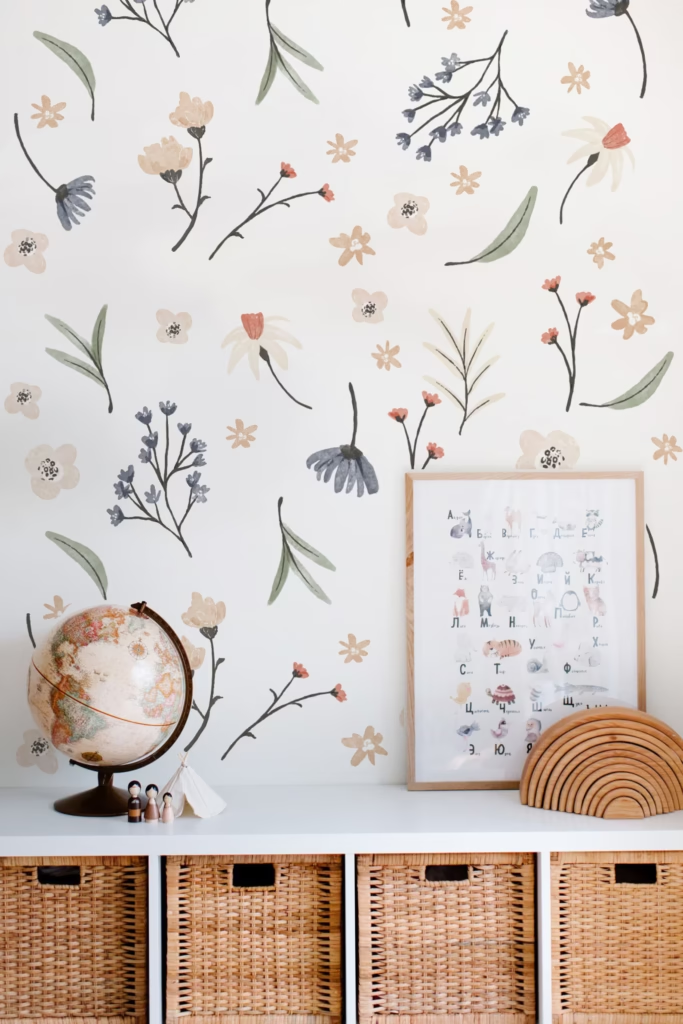
Floral wall decor has never been more varied or more sophisticated. In 2026, the category has split into distinct aesthetic lanes — from tight, scientific botanical illustration to loose watercolor washes to full-wall maximalist garden scenes. Each one suits a different interior style and a different kind of room.
This guide breaks down the major floral wall decal trends of 2026, with notes on which styles suit which rooms and how to use them well.
Why Floral Decals Are Dominating Home Decor in 2026
A few converging forces:
Biophilic design is mainstream. The idea that bringing natural elements indoors improves wellbeing has moved from wellness blogs into mainstream interior design. Plants, natural materials, and botanical prints are everywhere — and for people who can’t or don’t want to maintain many live plants, floral wall art offers the visual benefit without the maintenance.
Maximalism is back. The sparse, all-white minimalism of the early 2020s is fading. 2026 interiors embrace layered pattern, color, and visual richness. Floral decals fit this perfectly.
Personalization over prescription. People are moving away from buying entire “looks” from a single brand and toward curated, personal collections. A floral decal wall represents a personal choice, not a showroom mock-up.
Trend 1: Botanical Illustration (The Science Lab Look)
Think hand-drawn botanical plates from 18th-century naturalist journals — precise, detailed illustrations of specific plants with roots, leaves, flowers, and Latin names.
The aesthetic: Cream or aged white backgrounds, dark ink outlines, muted earthy tones. Sometimes printed on faux aged paper backgrounds.
Where it works:
– Home offices and studies (intellectual, focused energy)
– Kitchens with an herb garden adjacent
– Entryways with a European or classical design sensibility
How to use it:
A collection of 3–5 different botanical illustrations arranged in a grid (like framed prints, but without the frames) creates a gallery wall effect with cohesion and depth. Mix species — lavender, rosemary, foxglove, poppy — for variety within the style.
Color note: Botanical illustration works on almost any wall color because it typically contains its own background. On dark walls, choose white-background botanical decals for maximum contrast.
Trend 2: Oversized Watercolor Florals
Large, loose watercolor flowers — peonies, dahlias, wildflowers — with soft, bleeding edges and an impressionistic rather than precise rendering. The scale is key: these work at 18–36 inches per bloom.
The aesthetic: Pale blush, dusty mauve, soft terracotta, warm ivory. Deliberately imperfect, as if painted by hand.
Where it works:
– Bedrooms (romantic, soft)
– Nurseries (gentle without being saccharine)
– Living rooms with a maximalist or “curated vintage” direction
How to use it:
A cluster of 3–5 watercolor florals in related but slightly different tones, arranged asymmetrically, looks like a section of a botanical mural. Vary sizes from large anchor blooms to small accent flowers for visual rhythm.
Browse: Flowers & Floral Wall Decals
Trend 3: Wildflower Meadow
Rather than individual flowers, a wildflower meadow decal creates a naturalistic scene — stems, grasses, and varied small blooms clustered at different heights, as if a meadow grew up from the baseboard.
The aesthetic: Loose and natural. Chamomile, cornflowers, poppies, lavender, wild grasses. Colors can be full-saturation bright or muted and earthy.
Where it works:
– Along baseboard level in a nursery (magical for photos)
– Behind a freestanding bathtub in a bathroom
– In a sunroom or conservatory
The baseboard trick: Apply wildflower meadow decals starting at the floor and extending 12–24 inches up the wall. The effect is that the room is growing out of a meadow — one of the most popular techniques in nursery design right now.
Trend 4: Dark Floral (Moody Garden)
Dark backgrounds — deep navy, forest green, charcoal, burgundy — with rich, saturated floral designs in jewel tones and cream. Roses, peonies, and tropical leaves in deep burgundy, emerald, and gold.
The aesthetic: Victorian hothouse. Maximalist, slightly gothic, deeply romantic.
Where it works:
– Dining rooms (dramatic focal wall)
– Primary bedrooms (intimate, rich)
– Powder rooms (maximum impact, small space)
How to use it:
Dark floral works best as a single accent wall paired with neutral surrounding walls. The richness of the design creates so much visual energy that four dark floral walls would be overwhelming. One wall is transformative.
Trend 5: Minimalist Single Stem
At the opposite end of the spectrum: one beautiful, oversized botanical stem — a branch of eucalyptus, a single magnolia bloom on a branch, a long-stemmed poppy — rendered as a simple line drawing or subtle color.
The aesthetic: Spare, Japanese-influenced, modern. The negative space is as important as the design.
Where it works:
– Modern and Scandinavian-style spaces
– Hallways and narrow spaces where complex designs would overwhelm
– Bedrooms as a quiet, non-distracting element
Sizing rule: For a minimalist stem to read correctly, it needs to be large — at least 3–4 feet tall. A small single-stem decal loses its impact. Go big and let the space around it breathe.
Trend 6: Tropical and Jungle Leaf
Large tropical leaves — monstera, palm, banana, bird of paradise — in deep greens, warm olive, and cream. The energy is lush, exuberant, maximalist.
The aesthetic: Urban jungle meets interior design. Not cute or whimsical — grown-up and sophisticated when done well.
Where it works:
– Living rooms (especially with natural rattan and wood furniture)
– Bathrooms (humidity doesn’t affect vinyl on tile)
– Home offices and creative spaces
The corner trick: Place large leaf decals at the top two corners of a wall — framing the space like oversized parentheses. The effect is immersive without covering the entire wall.
Trend 7: Floral + Typography Combination
A meaningful word or phrase — “BLOOM,” “WILD,” a name, a meaningful date — surrounded by or overlapping with a floral arrangement. The interplay of text and botanical art creates a piece that is both decorative and personal.
The aesthetic: Art print-style. Feels designed rather than decorated.
Best use cases:
– Above a fireplace or mantel
– In a primary bedroom above the headboard
– As a nursery name piece with flower accents
Room-by-Room Floral Decal Guide
Nursery
Best styles: watercolor florals, wildflower meadow, pastel botanical
Color palette: blush, sage, warm ivory, dusty mauve
Tip: fabric decals only — you’ll redecorate in 2–3 years
Bedroom
Best styles: oversized watercolor peonies, botanical illustration, dark floral accent
Color palette: whatever coordinates with your bedding
Tip: scale up — bedroom walls are large and small designs look timid
Living Room
Best styles: tropical leaf, botanical grid, large statement floral
Color palette: coordinate with your dominant furniture color
Tip: use one large piece rather than many small ones
Kitchen
Best styles: herb botanical illustration, wildflower strip, simple daisy or sunflower clusters
Color palette: warm whites, soft greens, buttery yellow
Tip: vinyl works well in kitchens for easier cleaning
Bathroom
Best styles: tropical leaf on tile, single-stem botanical, dark floral on an accent wall
Color palette: whatever works on your tile and fixture tones
Tip: apply to tile for the safest, easiest removal
How to Choose the Right Floral Decal for Your Room
Match the design style to the room style. A precise botanical illustration looks odd in a maximalist, colorful room; a loose watercolor doesn’t read correctly in a sleek, modern kitchen. Style coherence matters.
Scale up more than you think you should. The most common mistake with floral decals is buying too small. On a large wall, a design that looks big in the product photos can read as tiny in context. When in doubt, go up a size.
3–5 color rule. Your decal palette should include colors already present in the room (textiles, furniture, art). If your floral decal introduces brand new colors that appear nowhere else in the room, it will look like an afterthought rather than a considered design element.
Leave breathing room. Especially for detailed botanical illustration — the space around the design is part of the composition. Don’t crowd floral decals up against furniture, outlets, or other wall elements.
Browse the full Flowers & Floral Wall Decals collection at DecalHouse. Over 35 designs in vinyl and fabric, ships across the US with free shipping over $50.